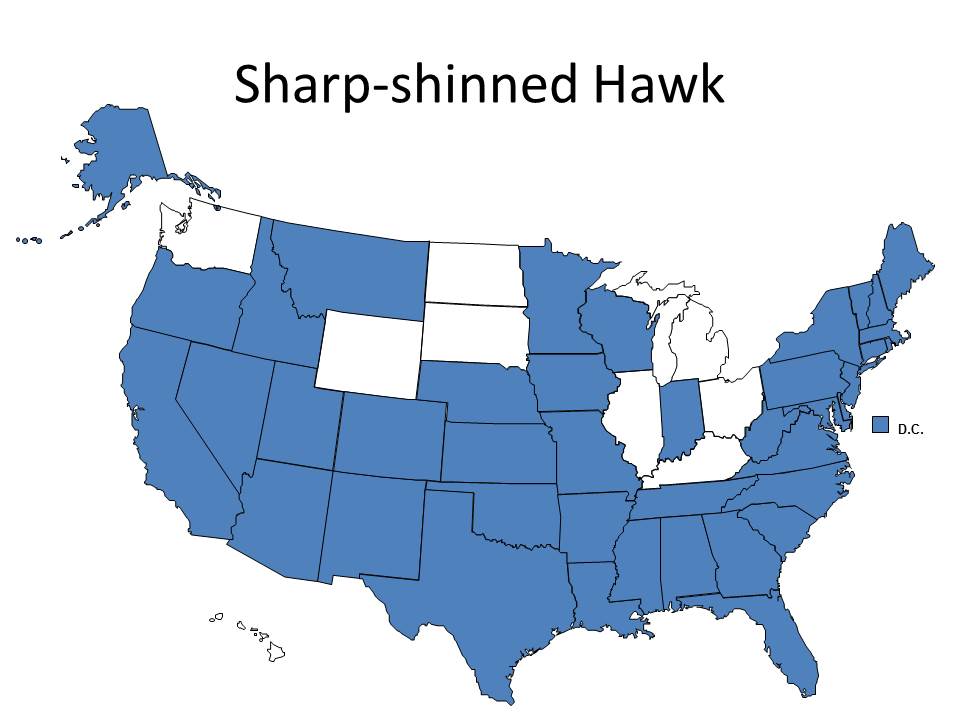
In 2014 a trip to the upper Midwest enabled me to get both my SD and ND statelists above 200. Those were my 47th and 48th continental US states to exceed 200. That left MT as my last of the continental 49 states with a list below that threshold. Admittedly that is a somewhat arbitrary goal - it’s a lot easier to get to 200 in larger states like CA and TX with large statelists than in places like NH and RI with smaller statelists. But ever since 2014, I’ve wanted to get back to MT to get my last continental US statelist over 200.
I started planning a western MT trip back in 2019, and had
hoped to go in June of that year. But
that was the year my wife and I moved from MA to NC, and I was focused on
selling the old house and buying the new one.
So I put the trip off to 2020.
But then Covid hit, so I delayed it to 2021. And then with the pandemic continuing, I
delayed the MT trip to 2022. Then in
February 2022, being fully vaccinated and boosted, I finally decided that it
was safe enough to get back on the road and schedule the trip. I reached out to my good birding friend David
Donsker and he agreed to go along as well.
We made our plane reservations for July 6-16 to Missoula, and were all
set. That is except for lots of planning
– hundreds of hours of planning.
I’ve birded in MT on 4 previous occasions, most recently a
4-day trip in May 2014, giving me a total of 175 species. Each of these trips was in the eastern or
central portion of the state dominated by various plains and grassland
habitats. So since I had never been to
the mountains of western MT with a very different mix of bird species, I had
significant statebird potential on my first trip there. Certainly, it should be easy to at least add
the 25 I needed to get to 200. And since
we’d be in the northwest corner of MT not far from ID, I decided to add a
couple days in the ID panhandle.
My planned route would give me a whopping 84 targets in MT
though I’d be happy if I found just 47.
That would put me 6 over the old ABA reportable threshold for MT of 216,
and of course way over my goal of 200.
Plus I had another 26 targets in ID with a realistic goal of finding
12.
If I met my expected totals I would add 59 new statebirds in
MT and ID. That would give me 14,989
Total Ticks – the sum of all my US state and Canadian province lists. Just 11 short of my goal of the nice round
number of 15,000. But with a bit of luck
(and good planning) 15,000 ticks might be within reach. Sure would be nice to reach both lifelong
milestones, all continental states over 200 and total ticks of 15,000, on the
same trip.
With a bit of luck this could be a really exciting trip!
This blog post is the third of four parts summarizing our
trip, covering days 5 through 8 in MT.
Day 5 – 7/10 - Wayfarers SP, MT
We left ID after a full and successful day of birding to
head back to Kalispell. But the day
wasn’t quite over yet. Since we were a
bit ahead of schedule, we had time to double back to Wayfarers SP at the north
end of Flathead Lake to try for recently reported Merlins. One or two had been reported there several
times this summer, and most recently 2 birds were said to have been seen chasing
a Bald Eagle through the park. Sounded
like they might be nesting. But, with no
specific locations given, it might be difficult to find them, even though the
park wasn’t too big. It was late
afternoon when we pulled in, but we still needed to pay the full $8 day use
fee. Soon after we got on the narrow
road that snakes through the park we started to hear some raucous calls. I quickly pulled somewhat off the road in an
admittedly less than ideal location.
Luckily it only took a few seconds to track down the source of the calls
– they were begging calls from 2 full-sized juvenile Merlins at the nest which
was on a horizontal branch in a large conifer.
And both parents were there as well (MT statebird #29). I still need this species in quite a number
of central states.

Sure is nice when a speculative plan comes together. And a great way to end the day.
Day 6 – 7/11 – Western Going-to-the-Sun Road, Glacier NP
This was our only full day in the western portion of Glacier
NP, and we had 3 key places to bird – Avalanche Lake and campground, McDonald
Lodge, and the Upper McDonald Creek trail.
There were likely benefits to birding each of these sites at dawn, but
which one would be best? It seemed like
our best possibilities would be around the Avalanche campground and on the
trail to Avalanche Lake, and that trail was one of the most popular ones in the
park, so we decided to head there first to try to beat some of the crowds. The other two spots would have to wait till
later in the day.
We arrived at the parking lot near the Avalanche Campground about
6:15 and got almost the last parking spot.
I guess it was a good thing that we covered this spot first at least as
far as the crowds were concerned. And
soon after we got out of the car I added 2 MT birds - singing Varied Thrush
(#30) and Golden-crowned Kinglet (#31). I’ve
now seen Varied Thrush in all 6 states in its regular range, not to mention just
as many states where it was a rarity.

So far the birds were saying it was a good choice to start there as well. We took a slow walk around one of the campground loops but didn’t add too much. That is except a Red Fox that got a little closer to us than we would have liked. Then we walked a portion of the Trail of the Cedars in route to the Avalanche Lake Trail, adding another Varied Thrush and a Pacific Wren, but birding was pretty slow.
We finally got to the Avalanche Lake Trail and started
heading uphill. The first half of the
trail went through a very dense cedar-hemlock forest that was great for Varied
Thrush (we heard 8 of them along the way), but little else. The trail opened up a bit about halfway up,
and a blowdown afforded some nice views.


And the birding picked up a bit too, but just a little. Finally, we reached Avalanche Lake, first arriving at the riparian area at the lake outlet. Here we had a Warbling Vireo and MacGillivray’s Warbler, and then heard the characteristic song of the Fox Sparrow (#32). Later the trail rose a bit above the lake providing this nice scenic lake view.

The lake was supposed to be good for both Goldeneye species but we found no waterfowl at all despite lots of scans. Though on one of my searches I spotted a large solid gray bird flying across the lake. I watched it for several seconds until it landed in a distant conifer. Although as a perched bird it was too far to ID, based on the size and color in flight I decided it was a Canada Jay (#33). Not the best view but it would have to do. Later we also had a nice flock of 20 or more Vaux’s Swift over the lake. Though try as we might, we couldn’t turn any into Black Swifts which were supposed to be regular here. We then took the long trail back to the campground, along with many, many hikers. Needless to say we didn’t have many birds on the way down. Though as we got to the campground to eat lunch a friendly Steller’s Jay hopped around on the next table hoping for scraps. This bird of the Interior West race gave us great views of its white “eyebrows”. We ended up with just 18 species for this 5-hour trip. In hindsight this might not have been the best site to bird at dawn after all.
Next we headed to the Upper McDonald Creek trail a short
distance away. A key target here was
Harlequin Duck which nests along the cliffs, and represents a major portion of
the nesting Harlequins in MT. We read
that the males leave the nesting sites in June and head back to the coast. So by the time of our trip only females (and
young) remain in the area. But despite
lots of searching along the creek we found no birds. We even came back 2 days later and tried
again unsuccessfully. Along the way we came
to 2 sites cordoned off to protect Harlequin nesting spots.


It made me wonder if the female Harlequins were on eggs at the time of our trip. If so, the females would only come out of their nesting cavities occasionally for a quick meal then head back to the nest. Maybe we picked the worst time of the year to look for them.
Our last stop of the day was the Lake McDonald Lodge which
had had a number of my targets in recent reports. But by the time we arrived in mid-afternoon
the lodge and grounds were full of people and cars. We made a quick search for hummingbird
feeders (we still had no hummers in MT), and a scan over the lake for
waterfowl, but came up empty on both accounts.
But we still needed Chestnut-backed Chickadee for MT, and this western
side of the park was supposed to be the area for them, and in fact the
only area for them amongst all our MT birding sites. So we decided leave the lodge area for now, check
into our hotel, get some dinner, and head back to the lodge grounds when it was
a bit cooler to try for the Chickadee again.
We returned to the lodge at 6:30 and played some Chickadee
calls at a number of spots without any luck.
Then I noticed that the cedars along one side road looked good for them
so we gave it a try. Soon we heard some
Chickadee notes, and with a bit of tape had a Chestnut-backed come in to
investigate (#34). It would be our only
one in MT. Interestingly, my statebird
map for the 6 states in the regular range of this species matches that for the
Varied Thrush. Though unlike the Thrush,
the Chestnut-backed is not prone to vagrancy.

It was a nice way to end a long, tiring, though productive day.
Day 7 – 7/12 – Eastern Glacier NP Going-to-the-Sun Road
In my original plans this was going to be our day to hike
around Logan Pass and other trails near the Continental Divide. But the Going-to-the-Sun Road was still
closed due to snow, even though the park’s website says it is normally open by
early July. There was a rumor that the
road may open on the 13th, so we moved up our planned birding in the eastern
part of Going-to-the Sun to the 12th, and crossed our fingers that the road
would truly be open the next day and allow us to get to the highest portions of
the park on the 13th.
With the road through the park being closed, we had to drive
all the way around the southern edge of the park to get to the eastern entrance
around St. Mary. Along the way we had a
pair of Mountain Bluebirds and a flyby Cooper’s Hawk near Browning (#35) – a
silver lining of that longer ride outside the park. I’ve now seen Cooper’s Hawk in all the Lower
48 states plus DC.

We finally rolled into the St. Mary’s Visitor Center at about 7 and our thoughts instantly went to Veery which was our key target here. The visitor center was in the middle of a grasslands, so I wondered where we might find the proper riparian habitat for Veery. But as soon as we opened the doors we could hear a Veery singing a short distance away to the northwest (#36). That was a lot easier than expected. The references also talked about the grasslands near the St. Mary visitor center harboring a number of sparrow species, and a sparrow chorus it was. Within minutes we heard songs from Savannah, Clay-colored, White-crowned, Lincoln’s, and Vesper. Here’s a panorama of the surrounding grasslands.

Our plan for the morning was to take a 4-mile loop trail,
starting with the Red Eagle Lake Trail, then return on the Beaver Pond
Trail. Recent reports from these trails
had included no less than 6 of my remaining targets – Barrow’s Goldeneye,
Black-backed Woodpecker, Calliope Hummingbird, Alder Flycatcher, Olive-Sided
Flycatcher, and Cassin’s Finch. Truly a
target-rich location. We began our walk
along the edge of the grasslands getting many of the same sparrows we heard at
the visitor center. Then we entered a
nice wetlands with several singing Willow Flycatchers, MacGillivray’s and
Yellow Warblers, and Northern Waterthrush.
Then I heard what sounded like half of a song of an Alder
Flycatcher. The Sibley app calls this the
“Rrreea call” of the Alder. We played
some tape and a bird flew in in response to the Alder’s “Peet call”. We had our Alder Flycatcher (#37). Like several of my other targets on this
trip, Alder Flycatcher is mostly an eastern bird in the US, passing through
many states as a migrant where I still haven’t caught up to it. But in Canada its nesting range goes coast to
coast. The Sibley app shows it as a
regular breeder in just one spot in MT near Glacier NP, but not in ID.

Farther down the trail we soon left the wetlands (and the mosquitoes!) and entered an area with many trees that had recently died. Most of the trees had obvious spots where the bark had been flaked off by Three-Toed and/or Black-backed Woodpeckers, so we were optimistic that we might find one or both of our target woodpeckers. But despite lots of searching and playing tape, we could only find one Hairy Woodpecker. Maybe there was just too much good habitat and the woodpecker density was too low.
Eventually we reached the trail junction and turned onto the
Beaver Pond Trail to head back to the parking lot. The woods were dominated by aspens, and we
were able to find two Red-breasted Sapsucker nests each with at least one noisy
nestling – we had 10 Sapsuckers on this part of the trail alone. As we continued our walk we caught brief
glimpses of the beaver pond, and each time we scanned for the Barrow’s
Goldeneyes that are supposed to be breeding there. Eventually we came to an opening and we
spotted movement on the lake – it was a female Bufflehead and 3 ducklings. And then we noticed a duck sleeping on a rock
in the middle of the lake. It was a
female-plumaged Goldeneye, but which species?
(And how did we miss these birds on all our previous scans?) It eventually woke up and showed us an all
dark bill – female Barrow’s have mostly yellow bills, right? We were disappointed that it was just a
Common, even though only Barrow’s had been reported here. Then we got a better look at the head shape
and it was sloped forward with a shaggy crest like a Barrow’s, as shown in this
passable digi-binned photo.

With a bit of research we found that the female Barrow’s only acquires a yellow bill during winter, which is the typical time of year that we might look for them on the New England coast. And its bill is actually dark during breeding season. So we had our Barrow’s Goldeneye after all! (#38). I now just need this species in one more western state (SD) where it’s a wintering species. I’ve also seen it as a rarity in WI and 3 northeast states.

Soon after we confirmed the ID a moose ambled by and came to the beaver pond to drink.

The riparian area was quite birdy including species like Least Flycatcher, Warbling Vireo, Orange-crowned Warbler, and Lincoln’s Sparrow. And several meadows we passed through were full of pretty wildflowers, though we still couldn’t come up with a hummingbird. All in all it was a nice walk even though we only got a couple of our targets. [As a post-script: later that day we ran into birders who mentioned that a Great Gray Owl had been seen from these trails just a few days earlier, though it had not been seen the last couple days. That would have been a good one to run into.]
The rest of the day we planned to bird a couple short trails
farther west along St. Mary Lake. But by
the afternoon it was quite hot and sunny.
And worse yet, almost the entire area had been burned and there were
next to no tall trees remaining to offer any shade. We did walk the Sun Point Nature Trail,
finding a bit of shade along the lake.
And we found a spot where there was a nice breeze coming off the
lake. The only thing that was missing
was a bench.

As we watched out over the lake we noticed a small flock of birds in the distance flying low over the surface. It was pretty far away so it took us a while to verify field marks, but we were seeing all-dark Swifts, with shallow and slow wingbeats. David commented that they reminded him of Leach’s Storm-Petrels. They seemed too big to be Vaux’s Swifts which might hardly even be visible at this distance. And along with the flight pattern and coloration, we concluded we had a flock of 4 Black Swifts (#39). MT was only my third state for this elusive species; I’ve also seen it in Canada in BC.

A short time later a family group of Hairy Woodpeckers flew into the trees right in front of us. These were of the interior west race that have significantly less white on the back and wings than our eastern race. We commented how similar they are to Three-toed, and could be easily misidentified by eastern birders. Sure enough just a minute later a couple birders came along the trail, spotted the birds, and ID’d them as Three-toed. Not sure if the little ID lesson we gave them was enough to persuade them into taking Three-toed off their life list though.
Day 8 – 7/13 – Logan Pass and Piegan Pass Trail, Glacier NP
Our plans for this day were up in the air, with options all
based on whether the Going-to-the-Sun Road would be open all the way through Logan
Pass. As of 5 AM when we left the hotel
the Glacier website said the road was still closed. So we once again made the 2-hour long drive
around the park to enter on the east side at St. Mary. But as we arrived at 7 AM there was a park
ranger there to tell us that the road was indeed open. It turned out that the 7/13 opening date tied
a record for the latest date the road had ever been opened. But would the late
spring snows cause us problems on the trails?
Now with access to the highest stretches of the
Going-to-the-Sun Road, our plan was first to hike the Hidden Lake Trail at
Logan Pass to look for Ptarmigans and Rosy-finches. Then we would head to the Siyeh Bend/Piegan
Pass Trail for other boreal species.
When we got close to Logan Pass there was quite a bit of snow still on
the ground, including an 80-foot tall drift at a location aptly named “The Big
Drift”. We were one of the first cars to
get to the parking lot at 6,600 feet elevation and saw this beautiful landscape
of snow and wildflowers on the mountains.

But the Hidden Lake Trail was nearly completely snow-covered, and officially closed even though there were quite a number of people on at least the lower portion.

You would normally look f or Ptarmigans in vegetated patches at the edge of a snow field. But since most of the area along the trail was still snow covered, there were no grassy patches for them to feed in. There were however quite a number of Gray-crowned Rosy-Finches flying around and feeding on the snow (#40). And a number of American Pipits both calling and singing. Not sure if I’ve ever heard a Pipit singing before.
If the Ptarmigans were still in the area they would have to
be lower in the mountains where the snow was only patchy. I scanned a number of such areas in the distance
hoping to spot some movement but not surprisingly came up empty. Though I was surprised (and lucky) to pick up
a Clark’s Nutcracker flying along the treetops on one of my scans (#41 – that
gives me 216 for my MT list which was the old ABA reportable threshold). Nice to get the Nutcracker as a bonus bird
since we weren’t able to get to the Ptarmigan’s habitat in this abnormally
snowy year.
Next I was on to the Piegan Pass Trail using the trailhead starting
at Siyeh Bend. The trail started at 5,840
ft and climbed to 7,000 ft over a 2.6 mile route through mature spruce-fir
forest. At those elevations our biggest
concern was that this trail too could still be snow-covered. And along with the elevation gain, David
decided to pass on this trail. The lower
portions of the trail had occasional snowy areas making the hiking a lot more
strenuous, and the trail a bit difficult to find at times, but it wasn’t too
bad. Along the way the forests were
beautiful with the regulars like Siskins, Golden-crowned Kinglets, Mountain
Chickadees (including a family group), and Red-breasted Nuthatches. And I came upon more trees showing
Three-toed/Black-backed activity, like this tree surrounded by a pile of bark
on the ground.


But the real targets for this trail were the boreal species mostly seen at higher elevations, so I had to continue higher in the mountains on my search. Unfortunately, as I gained elevation a greater percentage of the trail was snow-covered, and in some cases the snow drifts were waist deep. Luckily, they were packed down well enough that I could mostly walk on the surface.

I had climbed to about 6,500 ft when I started to hear call notes up ahead that I didn’t recognize. I recorded it with my Merlin app and it identified it as a Pine Grosbeak. Merlin isn’t too accurate at times but this time it was right on – I played some tape of the Pine Grosbeak call notes and it was a perfect match. Then it started singing which again matched the song on the app (#42). If it hadn’t been for Merlin I wouldn’t have identified that one.
A bit farther along I heard some Chickadee notes that got my
attention. The entire trip I had been
working on separating the calls and songs of the four species of Chickadees
that could be in the area. And those
calls up ahead sounded like they were from my last remaining Chickadee target –
the Boreal Chickadee. I got closer to
the calls and played a bit of tape. A
Boreal Chickadee flew right in and checked me out just 5 feet away (#43). Oh if I only had a camera… I still need this species in several northern
tier states, though I have seen it as a rarity in MD and MA.

I was just about to reach the beginning of Piegan Pass when I added my next bird – this one was a White-winged Crossbill that called as it flew overhead (#44).
I was now at just above 7,000 feet, and the trail was mostly
snow covered, so I decided to turn around at that point. Interestingly the Pine Grosbeak was still
singing at the same location as I passed by it again back downhill.
And this Marmot was quite inquisitive as I passed by it
along one of the waterfalls.

But as they say on TV - “But wait, there’s more.” I had just returned to my car and took off my backpack when I noticed a large raptor flying by. It was close enough to ID even without binocs as a sub-adult Golden Eagle (#45). A nice way to end my birding on the trail.
I rejoined David at Logan Pass and we drove west through the
heart of the park on the newly opened Going-to-the-Sun Road, taking in some
beautiful scenery. One of the best shots
was this classic bowl-shaped valley formed by glacial activity.

We also stopped at Haystack Falls where Black Swifts have nested in previous years, but could not come up with them. And we made a few more stops along Upper McDonald Creek in unsuccessful searches for Harlequin Ducks. That one will have to wait for a future trip.
My next blog post provides a summary of the last portion of
our MT/ID trip on days 9-11.