Showing posts with label Tennessee. Show all posts

Sunday, December 17, 2023

Two Extreme Rarities (and Almost a Lifebird) in Central Tennessee, November 25, 2023

Early on the morning of November 25th I received this notification from the Tennessee birding Facebook group – “Ancient Murrelet at Chickamauga Dam”.  I wasn’t quite sure where Chickamauga Dam was, but Ancient Murrelet would be a lifebird for me so I might be interested in a chase.  It turns out that the dam is close to Chattanooga, some 3 ½ hours from home.  My normal one-way maximum statebird chase distance is 2 hours, and sometimes I’ll stretch it to 2 ½ hours for a really good bird.  But this would be a lifebird, so I guess I could justify more time on the road to go after it.  That is if it was reasonably reliable.

With a bit of eBird research I found out that the bird was first discovered the previous day, and was seen by many.  But with the long driving time I decided to wait for it to be spotted again on the 25th before I headed out.  In the meantime, I looked at my TN Needs Alert to see if there might be other potential statebird targets in that region.  Sure enough there was a semi-reliable Limpkin just 30 minutes away and not too far off my route to and from home.  So now I had 2 targets to pursue – I just needed to get confirmation that the Murrelet was still around.

As of 9 AM on the 25th there were just negative posts from the TN Facebook page.  There were lots of birders looking for the Murrelet, but they were coming up empty.  But just as I was about to write it off as a one-day wonder I noticed a post on Facebook that the Murrelet had been re-found.  It took me a bit of time to get myself ready, but finally at 10:30 I was out the door.  The chase was on with cautious optimism that a lifebird awaited me.

Shortly after getting on the road I noticed my travel time had increased to over 4 hours.  It turns out there was major construction on I-40 in western NC, reducing the road to just 1 lane each way.  Even though I was able to use some back roads to avoid some of the backup, I still had added more than 30 minutes to my route.  And then when I neared Knoxville I started to see signs to expect backups due to football traffic – the University of Tennessee is in Knoxville and it turns out a home football game was about to start.  That added even more time.  And then when I was just about 30 minutes away from the dam there was another backup – a tractor trailer had caught fire and was burning on the shoulder.  Now my 3 ½ hour drive had become a 5-hour drive.  But it would be all worth it if I got that lifebird.

As I neared Chickamauga Dam I checked recent reports and most said the Murrelet was feeding quite cooperatively near the dam.  It had apparently moved from the nearby boat ramp area where it had mostly been seen the day before.  So I headed right to the parking lot at the dam.  As I pulled in I noticed 2 birders walking toward their cars.  I flagged them down and found out that the bird was not presently being seen at the dam, but likely had returned to the boat ramp.  As we headed back to the cars I mentioned something like a lifebird was worth a 5-hour drive, and the one birder mentioned he was surprised it was a lifebird for me.  Hmm…  That started me thinking whether I had actually seen this bird before out west.  But there was no time to research my lifelist - my chase wasn’t over yet.

I quickly got back in the car and drove a short distance to the boat ramp lot where I spotted this group of 25 or more birders at the water’s edge.  This looked promising.

I arrived at the end of the boat ramp and the birders directed me to look to the left.  There was the Ancient Murrelet not more than 50 feet away floating near the shore.  Over the next 15 minutes it actively fed and swam in that same general area.  Interestingly, there were some large oak leaves floating on the water nearby, and it was hardly larger than the leaves.  I was able to get this phonescoped photo of the bird, complete with one of those floating oak leaves in the background.


While watching the bird I heard a photographer lament that the lighting wasn’t good.  To which another birder responded – “would you rather take pictures of a Mallard in good light or an Ancient Murrelet in bad light?”

I didn’t stay too long because I still had the Limpkin to pursue.  Plus I was way behind schedule given all the backups.  But as I walked back to my car I started thinking again whether the Murrelet was actually a lifer or not.  I pulled up my lifelist on eBird and there was the Ancient Murrelet already on my list.  I had actually seen this species in Alaska (on both of my trips there), and as a rarity on a pelagic trip out of California.  I was confusing this with the Long-billed Murrelet, another alcid that rarely shows up on inland lakes, which would have truly been a lifebird.  Another senior moment I guess.  I wouldn’t have made the long drive if I had realized it was just for a couple possible statebirds – even though the Murrelet was a first record for TN. 

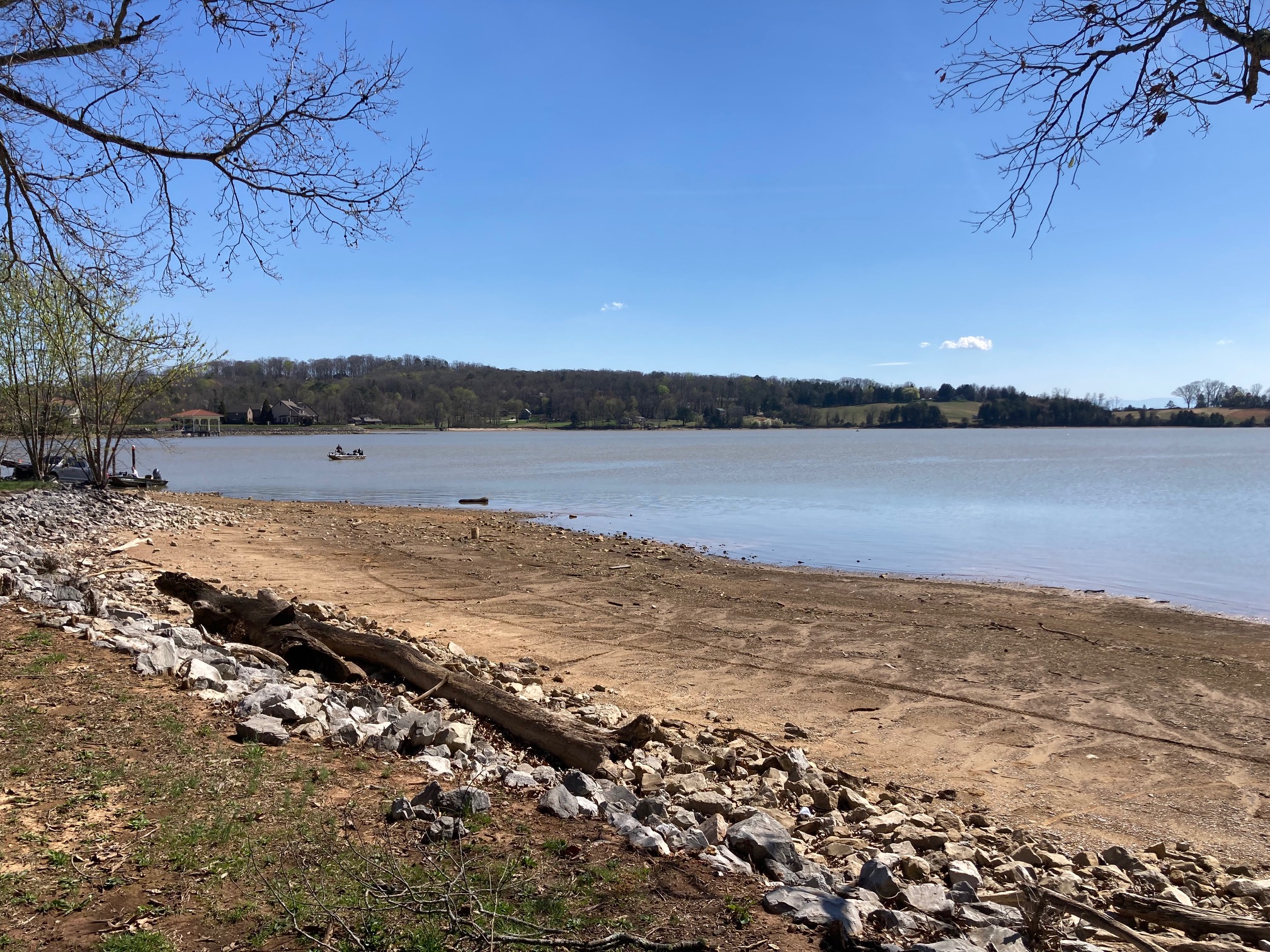
But now I was off on a Limpkin chase.  This had been an amazing year for vagrant Limpkins throughout the east, and this Limpkin was being reported sporadically feeding near a bridge over a small arm of Chickamauga Lake.  After a quick 30-minute ride I arrived at the bridge and parked nearby.  This part of the country has been under an extreme drought and all the water bodies were extremely low.  Here is a picture of the wetlands upstream of the bridge – there was a huge amount of potential muddy habitat for a Limpkin to feed in. 


It was time to find a brown bird in an all-brown background.  And oh by the way, it was about the size of a lot of those brown rocks now exposed by the low water levels .  I scanned the area below the bridge and found a nice flock of Ring-billed and Bonaparte’s Gulls, plus a few Killdeer, but no large brown wading birds.  Then I checked upstream of the bridge and found no birds at all.  Was the Limpkin search going to be more difficult than the search for the Murrelet?  I went back to the downstream side and scanned more slowly, but still no target bird.  Then I returned to the upstream side and noticed some movement in the water in the distance.  There was the Limpkin wading in the middle of the little stream of water that remained.  Here’s a digi-binned picture of the bird without zooming in – it really blended in with its surroundings.

And here it is heavily cropped.

My statebird map for Limpkin is inserted below.  I’ve seen Limpkin in FL which is the only state where it is regular (shaded in blue).  And now TN is my 3rd state (shaded in brown) where I’ve seen it as a rarity.


That was certainly a most successful day, despite all the driving.  In hindsight, I guess I’m glad that I hadn’t remembered my lifelist correctly or I wouldn’t have been able to add these 2 extreme rarities to my TN statelist, which now stands at 258.

Monday, September 4, 2023

Flock of Swallow-tailed Kites, Bluff City, Sullivan County, Tennessee, August 23, 2023

It was August 22nd and we were well into what I call “The Summer Doldrums of Birding” – a period where the breeding season is over, and migration isn’t yet underway.  Unfortunately, that lasts nearly 2 months here in the mountains of western NC.  Luckily, it’s good birding the remaining 10+ months of the year.  I hadn’t had a new statebird, let alone even tried for one, since coming back from my Oregon, Idaho, and Washington trip in June.

Even though it was a slow time of the year I decided to check my eBird Needs Alert for Tennessee on the off chance that there might be something to chase after in the eastern part of the state.  As is usually the case, most every listed species was being seen in the central or western part of the state.  But then I noticed some reports of Swallow-tailed Kite from Sullivan County.  First of all, I didn’t even know I needed STKI for TN – thank goodness for eBird Needs Alerts!  Then I thought I remembered that Sullivan County was near the northeast corner of TN.  And sure enough a quick search on GoogleMaps showed the site to be 1 hour 55 minutes from home - just within my self-imposed 2-hour driving limit for chases.

Now I had to determine if my target was reasonably reliable to justify the chase.  There were nearly daily reports recently of up to 5 birds along Chinquapin Grove Road, with reports going back to August 6th with up to 8 birds spotted.  That was all good news.  But, there were no reports from the 22nd.  Since the spot was not a hotspot I couldn’t tell if anyone looked for them unsuccessfully that day.  I tried to overlook the lack of reports writing it off simply as most of the local birders who wanted to see the Kites had already done so by then.  The out-of-range Kite flock was old news of sorts.  At least that’s what I told myself.  Based on the Kites’ history at the site I assumed they were reliable enough to make a run to TN to give them a try.  I was free the next morning - the chase was on!

Kites aren’t typically up and about until mid to late morning, so I figured there was no need to leave the house too early.  I was out the door at about 6:45 which had me rolling into the area where the Kites had been seen at 8:40.  The site turned out to be an active cattle ranch, with grazing pastures in all directions.  A few reports mentioned seeing them across the road from a red barn, which was pretty obvious when I pulled up.  So I decided to park along the road right at the barn and set up my scope to look roughly northeast over the fields opposite the barn.

I didn’t see any Kites when I first arrived, but I wasn’t too worried since it was likely still too early for them.  Though I kept scanning the skies just in case.  At about 9:30 I saw the first Vultures soaring nearby.  There were several reports of the Kites soaring in Vulture kettles so I scanned the Vultures closely, but to no avail. 

Then at 9:40 I spotted a raptor flying nearby quite low – without even a binocular view I knew it was my target Swallow-tailed Kite.  Then 3 more followed it.  All 4 birds landed at the top of a tall sycamore tree about 300 ft away just across the road from the barn and proceeded to preen for the next 15 minutes.  I was able to get these phonescoped shots of some of the perched birds.


Very striking birds!  And certainly worth the chase to get this rarity for TN.  Swallow-tailed Kite was number 256 for my TN list.  

My statebird map for this species is inserted below.  The blue-shaded states are those where I’ve seen Swallow-tails in their regular range.  Blue cross-hatched AL is the last state in its regular range where I’ve yet to see this species. And now I’ve seen Swallow-tailed Kite in 2 states where it is a rarity (TN and NC shaded in brown).


 \


Monday, March 13, 2023

Three Opportunistic Chases Nets Two Statebirds in Knoxville, TN, March 7-8, 2023

My wife and I scheduled a trip to Knoxville, TN in early March 2023 to take our dog to the University of Tennessee Veterinary School for some testing.  If we had spare time, that could present some statebird opportunities in a part of the state I don’t often get to.  Though at best my time would be limited, so the targets would likely need to be nearby.  I started to watch the eBird Needs Alerts during the week leading up to the trip but initially came up with no nearby targets.  But then the day before we left a report came in of a Tundra Swan in a small impoundment at a treatment plant a short distance east of Knoxville.  It was about 10 minutes off our route to and from Knoxville, so it was one to try for likely on the way home.  At least that gave me one to look forward to.  Assuming the Swan stuck around, that is.

We made the drive to Knoxville on the 6th, and that evening I re-checked my Needs Alert.  The Tundra Swan was still around, so that was good news.  And even better, two more of my “Needs” were reported that day no more than 15 minutes away – a Red-necked Grebe and a Black Scoter, both on Fort Loudoun Lake.  It sounded like I would have some free time in the middle of the day on the 7th, so it would be feasible to chase after both birds.  Suddenly I was up to 3 statebird possibilities. 

It turned out that I had about 2 hours of free time in the early afternoon of the 7th, which was perfect to bird nearby Loudoun Lake.  I first went to the boat ramp at Concord Park where the Red-necked Grebe had been spotted the previous day.  Comments from that sighting noted that the bird was with Pied-billed Grebes generally on the far southern part of the lake.  Unfortunately looking to the south meant looking into the sun that time of day, and my initial scans came up with just a couple Cormorants in the difficult lighting conditions.

Then I panned more to the southeast in somewhat better lighting and picked out a few Pied-billed Grebes in the distance.  Had I found the correct spot?  Sure enough a few seconds later I spotted the much larger Red-necked Grebe loosely associating with the Pied-bills.  The large yellow bill and longer neck were clinching field marks.  I tried some distant digiscoped photos but each time I got everything lined up the bird dove.  Here’s a picture of the reservoir with the Grebes about 2,000 ft out.

My statebird map for Red-necked Grebe is inserted below.  The blue-shaded states are those where I’ve seen this species in its regular range.  The 4 cross-hatched states are those in its normal range where I’ve yet to see it.  And the brown-shaded states are those where I’ve seen it as a rarity – several southeastern states as a wintering bird, and 2 central states as a rare breeder.


Luckily it only took a few minutes to get the Grebe, so I quickly headed to nearby Carl Cowen Park where the female Black Scoter had been reported the previous day.  The bird was swimming in a distant tight flock of 35 diving ducks, so I figured my best shot at finding the Scoter was to look for that flock of divers.  Unfortunately, once again I was looking to the south into the sun – ugh.  Amazingly I almost instantly found a flock of divers – did I have the flock?  But like the Grebes, they were nearly a half mile away.  I counted 47 birds, and watched the flock for at least 45 minutes.  Unfortunately, not only could I not pick out the Scoter, I couldn’t even be sure of the IDs of the other ducks (though I assumed they were Ring-necks, Scaup and/or Redheads).  I bet I had the Scoter in view, but the flock was just too far away and lighting was so bad that I couldn’t be sure.  That was frustrating.

After getting negative results on our dog’s tests (yay!), we headed home on the 8th.  Luckily my non-birding wife agreed to let me take the 10-minute side trip to try for the Tundra Swan.  The bird was being seen now 3 days in a row in an impoundment at a sewage treatment plant along Route 160 in Hamblen County.  The small impoundment was right next to the road, so I hoped we would need less than 5 minutes to find my target bird.  We pulled over on the road shoulder even with the pond and I did a quick binocular scan.  Even though that large white bird should have jumped out at me, I couldn’t find it.  Had it moved on since yesterday’s sighting?  There were some cattails and other vegetation on the pond, so maybe it was a bit obscured.  And sure enough, with a closer look I found the Tundra Swan on the near shore partially hidden by cattails.  Here’s a shot with no magnification of the impoundment, and with an arrow pointing toward the Swan.


TN is now my 8th state where I’ve seen Tundra Swan as a rarity.  Though I still need it in a number of states where it is a regular migrant.

That gave me two new TN statebirds in less than an hour of birding time.  That’s pretty efficient birding, and very opportunistic given my time and geographic constraints.  And with the addition of 2 birds my TN statelist is now at 255.

Thursday, October 20, 2022

Second Time is the Charm for Eared Grebe in Tennessee, September 28, 2022

In January 2022 I chased after an Eared Grebe in the northeast corner of TN at South Holston Lake.  The bird had been seen nearly daily for 2 weeks, and was reported 2 days before my trip.  So I was optimistic about my chances.  But it turned out that the last time the Grebe was spotted was indeed 2 days before I made the drive to TN.  Despite lots of searching I was the first person to come up empty on the Grebe.

So when reports of an Eared Grebe started to show up in September 2022 just west of Knoxville they really caught my attention.  The bird was at quite a small lake on the campus of Pellissippi State Community College in Knox County.  It was first reported on September 10 and continued to be seen on a daily basis.  I wasn’t too worried about chasing after it right away since vagrant Eared Grebes are often long-staying birds.  Then again, the South Holston Lake bird only stayed for 2 weeks, so I probably shouldn’t wait too long. 

I finally cleared my calendar to chase after the bird on September 28, and started to make my plans for the trip.  I also needed several migrant passerines for my TN state list, so I searched for migrant hotspots near the Community College that I could stop at while in the area.  A nearby eBird hotspot called Sharp’s Ridge had nearly daily reports of migrants, and was generally on my way back home, so I decided to give that one a try.  Although it would likely be best to look for the migrants in the early morning, my key target was the Eared Grebe.  So I decided to first look for the Grebe as my top priority bird, then try for the passerines afterwards if time allowed.

I was out of the house before 6 on the 28th, and pulled into the campus of Pellissippi State Community College about 8:15.  The small lake was right in front of me as I parked in one of the large parking lots (luckily no parking permits were needed).


I got out of the car and quickly scanned the lake with my binoculars.  There were a few Canada Geese and a number of domestic Muscovy Ducks, but no Grebe.  I scanned again but once again came up empty.  Several of the recent reports mentioned that the Grebe would dive frequently so I tried to remain optimistic.  Though with each additional negative scan I couldn’t help but remember my failed search for this same species in TN back in January.  Finally on one of my scans I briefly spotted a bird near the northeast end of the lake just a fraction of a second before it dove.  Was it the Grebe?  I trained my binocs at that end of the lake for several seconds until a bird finally popped up to the surface – it was indeed the Eared Grebe.

The Grebe continued to feed at that far end of the lake, so I walked around for a closer look.  Eventually the bird stopped diving and swam quite close to shore.  I got these passable “digi-binned” shots of my target bird. 


My statebird map for Eared Grebe is inserted below.  The blue-shaded states are those where I’ve seen this species in its regular range; cross-hatched MO is the last one in its regular range where I have not yet seen it.  And now TN is the 8th eastern state (shaded in brown) where I’ve seen Eared Grebe as a rarity.  It was #253 for my TN state list.


The Grebe continued at the community college stay at least through October 4.  Like I said – no need to rush after it. 

I only stayed at the college for a few minutes – after all there were other birds to chase after.  Next I headed to Sharp’s Ridge for some migrants.  My most likely target was Gray-cheeked Thrush which was seen there a number of times recently, including the previous day.  One recent report had Gray-cheeked and other thrushes at a fruiting black gum tree by “the ranger’s house”. 

I pulled into the park just before 9:30 and after a bit of driving found what was likely the ranger’s house.  And about 150 ft away found the fruiting black gum tree and it was indeed full of activity.  I spent at least 60 minutes watching the tree as numerous thrushes and mimids came in to feed including – Mockingbirds, Robins, Catbirds, Thrashers, and Bluebirds.  Eventually I spotted a couple Catharus thrushes but they were just Swainson’s.  I wandered around the park a bit and ended up with a respectable tally of 10 warbler species, but couldn’t come up with a Gray-cheeked.  At least the views from the ridge were nice.


 Oh well, it gives me a reason to come back to TN during fall passerine migration.

Tuesday, March 29, 2022

One Challenging Statebird and One Easy One in Northeastern Tennessee, March 24, 2022

While monitoring my eBird TN Needs Alert on March 5, 2022 I noticed a report of a White-winged Dove in Bluff City in Sullivan County.  That’s close enough to chase after, but often White-winged Doves that show up in the east don’t stay long.  Plus this bird was coming to a feeder, and although an address was provided, there was no information on whether birders could visit.  So I just wrote it off as an unchaseable rarity. 

But the reports kept coming with at least 1 sighting nearly every day.  And I was able to figure out the homeowner’s name on eBird, and along with the address, I found a phone number for the homeowner with a couple on-line searches.  I wasn’t too excited about calling the homeowner out of the blue though.  So I reached out to a local birding friend that I ran into while chasing a White-winged Scoter in Sullivan County a year ago to see if she had any information on the Dove.  It turned out my friend knew the homeowner and saw the bird on the 20th.  Here were the details – the Dove was coming to the feeding station in the backyard that was not visible from the street.  Although the bird was occasionally seen perched in trees in the front yard, by far the best viewing was from inside the house looking to the feeders in back. 

So of course, I’d need permission from the homeowner to come inside to watch the feeders.  Some birders had been granted access, why not try as well.  My friend offered to contact the homeowner on my behalf to pave the way.  And after that first contact, I sent an e-mail to the homeowner to ask permission.  Here was her reply -

“We are currently getting a little tired of all the attention the bird has caused.  If it were a life bird for you, I would be more encouraging.  The bird is usually here now only once a day, and every day it gets scared away by all the attention.  We would prefer to start giving the bird a  break if possible.  

“All I can say is, if you really want to see the bird, be here at 8:00 a.m.  Please stay in your vehicle as people standing in the street usually scare it away.  Also, please no walking around in our backyard as, again, the bird is very nervous and won't appear when people are standing around.”

I guess birders can love our birds a little too much…

At first, I wasn’t too encouraged about making the long drive if I was limited to just viewing from the road and not directly at the feeders.  But most of the recent sightings mentioned seeing the Dove perched in river birches in the front yard.  So perhaps if I and any other birders who happen to be there stay in our cars, this might be a successful strategy after all.  Game on!

And now that I committed to making the drive to TN, I went back to the Needs Alerts to see if there might be any other targets to pursue nearby.  Sure enough there were several recent sightings of a Mute Swan at Steele Creek Park in Bristol just 20 minutes to the north.  But was it a countable wild bird?  One post mentioned that a well-known nearby feral Swan was still in its regular spot.  And another post mentioned that the park naturalists checked locals who have Swans and no one was missing one.  So they determined it was a wild bird.  Countable it is!

So my plan was to first head to Bluff City and hope to get lucky with the White-winged Dove.  Then head to Steele Creek Park to look for the Mute Swan. 

The morning of the 24th I was out of the house by 6 which had me rolling into Bluff City by 7:45.  I pulled in front of 404 River Chase Cove and positioned my car to give me the best views of the tall birch trees in the front yard.  A few minutes later another car pulled up behind me and luckily both birders stayed in their car.  Not a minute later a pair of Doves flew into the trees – but they were both Mournings.  Several other Mourning Doves flew in a bit later, and after brief stops on the roof or in the trees, all disappeared behind the house presumably heading to the feeders.  Then I noticed another Dove on the roof of the house next door – yet another Mourning, which again dropped out of sight.  Seconds later it was replaced by another Dove.  I put this one in my binoculars and I instantly spotted the white leading edge of the wing – it was my target White-winged Dove!  I got this miserable digi-binned shot where the white on the wing is barely visible. 


The WWDO had appeared at 7:56, and at 7:59 it followed all the other Doves into the backyard out of view.  I waited another 30 minutes hoping to see the bird again but never re-spotted it.  While waiting for it to reappear a Mourning Dove landed on my windshield wiper.  I guess I was being quite enough after all!


My statebird map for White-winged Dove is inserted below.  Blue-shaded states are those where I’ve seen this species in its regular range.  Cross-hatched states are the couple remaining ones in its regular range where I’ve yet to catch up with it.  And the 9 tan states are those where I’ve seen this species as a rarity which is prone to vagrancy. 

Next I was off to the Steele Creek Park to try for the Mute Swan.  I was more optimistic about this one as it had been around for at least 3 weeks.  As I neared the Park driving through a residential community I flushed a flock of sparrows from the road side.  One had white outer tail feathers which I confirmed as a Vesper Sparrow after a short search.  That was a nice find but not new for my TN list. 

Minutes later I entered the Park and headed right to the lake.  I quickly found a couple pairs of Canada Geese but no big white waterfowl.  I walked a short distance to the east to see another portion of the lake and there was the Mute Swan “grazing” on the grass at the water’s edge.  That was easy.  As shown in this digi-binned picture the bird was not banded.  And at one point it stretched its wings which were not pinioned.  Sure seemed wild to me.


TN was my 4th state where I’ve seen Mute Swan as a rarity as it strayed outside of its regular range in the Northeast and Midwest.


While looking at the Swan another birder pulled up.  I mentioned to her that I had just come from seeing the White-winged Dove.  She said she had seen the bird the previous day on her 13th try!  Boy was I lucky.  And speaking of being lucky, I was apparently the last birder to see it as the Dove was not reported after the 24th.  Good thing I didn’t wait till a later day to give a try.

With the addition of 2 nice rarities that brings my TN statelist up to 252.  A fun morning of statebirding!

Tuesday, January 25, 2022

A Challenging Day of Statebirding in Northeastern Tennessee and Southwestern Virginia, January 13, 2022

Most birders use eBird to catalog and document their sightings these days.  And it has proven to be an excellent resource for me as I continue to pursue my statebirding efforts across the country.  By far the Needs Alerts are the most valuable tool in the eBird arsenal – I review nearly a dozen county and state Needs Alerts each day.

Starting in late December my TN Needs Alert included reports of an Eared Grebe at a hotspot named “South Holston Lake – Musick’s Campground” in northeastern TN.  The bird was first spotted on the local Christmas Count on December 26, and was seen on each subsequent report from that spot through January 11.  That location is barely south of the TN/VA stateline, and as a result the Grebe was sometimes also seen in VA waters.  That gave me 2 potential statebird ticks to target.  Plus on the 9th a Lark Sparrow was reported there “with a mixed Chipping Sparrow and Field Sparrow flock in the pokeweed stalks behind the sign-in mailbox”.  Seemed pretty specific.  And since wintering Eared Grebes and Lark Sparrows are often long-staying, I liked my chances.

That was more than enough to justify my 2 hour 15 minute drive to the area.  But then I started to research potential targets I might need in VA.  And just a 20-minute drive from the campground was a spot called Nicewonder Pond with a couple recent reports of multiple Turkeys.  Wild Turkeys had become something of a nemesis bird for me in VA, so I was excited to find a location where they might actually be somewhat reliable.  The pond had quite a number of waterfowl as well, so I wondered if the waterfowl were being fed, which in turn attracted the Turkeys. 

Then the icing on the cake was a report of an Orange-crowned Warbler on the 10th at a hotspot in Kingsport, TN.  I’m not usually too optimistic about being able to find a lingering warbler, but it was re-found on the 12th, along with a comment that Orange-crowns “are seen regularly here during winter”.  Sure enough there were quite a number of eBird records in this area in the last several years.

That gave me 5 potential statebird ticks.  If things went well, it could be quite a nice trip. 

The morning of the 13th I was out of the house pre-dawn and approached the area of Musick’s Campground around 9 AM.  The GPS coordinates of the hotspot were perfect, taking me right to the gate, which unfortunately was locked.  Complete with multiple “No Trespassing” signs.  The campground was obviously closed for the winter with no one in sight to ask for access.  I checked the area nearby thinking that I would find another spot to access the lake below the campground.  But each access point was gated with more “No Trespassing” signs, some more ominous than others.  I went to my iPhone and found a phone number for the campground, but not surprisingly there was no answer.

None of this was mentioned in the eBird checklists, nor in the hotspot itself.  Then again, the Lark Sparrow report mentioned a “sign-in mailbox” – did that mean you could somehow enter the campground and once inside there was a location where you would sign in?  But the No Trespassing signs were very obvious.  Had I made the 2+ hour drive for nothing?  Just then a car came by and the friendly driver stopped to ask if I was ok.  He lived nearby and had watched me wandering around and thought I had car problems.  I told him instead about my access issues.  He said he had a neighbor whose yard had frontage on the lake.  That neighbor was out of town and I could just hike through the yard to get to the lake.  Boy was I lucky the friendly resident was there to help out.

Within a couple minutes I was taking a short hike through the neighbor’s yard and made my way down to the lake.  I entered the lake bed just a short distance north of Musick’s, and had a good view of the water.  Now I just needed to find the Eared Grebe.  Most of the posts had mentioned the bird was on the far side, so that was my initial focus.  But with several scans I just found a few Bonaparte’s and Ring-billed Gulls, 4 Common Loons, and 1 Red-breasted Merganser.  I changed my angle and looked some more, finding a flock of Pied-billed Grebes, but nothing else new.  Then again, I did have a distant flyby of 2 small waterfowl that might have been grebes.  I spent more than an hour scanning the lake both in TN and VA waters but couldn’t come up with my target bird.  As it turns out the last time the Eared Grebe was seen was on the 11th.  So not only had I struck out on the Grebe, I also couldn’t get into the Campground to try for the Lark Sparrow, wherever it was.  A difficult start…

Next I was off to VA to try for Turkeys.  The key stop was Nicewonder Pond on Virginia Trail in Washington County.  And since almost all my route was in VA, I also kept an eye out for Turkeys feeding in the fields the whole way there, but to no avail.  Just as I turned onto Virginia Trail I came upon a guard house at the entrance to a private community.  The pond was on private property which was not mentioned in the eBird reports.  Not again!  I told the security guard that I was trying to go birding at the pond, but he said he couldn’t let me in.  But after a 10-minute discussion he relented and called his boss.  Another 10 minutes passed before he gave me permission to go in.  After all that effort I hoped it was all worth it.  But alas, after a short drive I got to the pond and found a few ducks but no Turkeys. 

What started as a promising trip was now down to just 1 possible target – the Orange-crowned Warbler.  And if it hadn’t been for some lucky breaks, I might not have even been able to access either of my first 2 planned stops.  On the drive back into TN I once again watched for Turkeys during the VA part of the route, but another strikeout.  Though I wasn’t more than a couple miles into TN when I spotted a Turkey flock on the roadside, which I don’t need in TN – very frustrating… 

A few minutes later I pulled into the waterfront of the South Fork Holston River in Kingsport, TN.  The hotspot was titled Riverfront Seafood which was a restaurant along the river.  And although there was some brush between the restaurant and the river, other recent Orange-crown sightings were scattered along the waterfront nearby.  So I figured all the brushy area along the river could be possible sites to search.  Though in reality the habitat was quite limited.  In fact, I wondered why most any bird might be attracted to it.  Here is a representative shot of one of the “better” areas.

I had heard that Orange-crowns will respond to recordings, though I had never had any success attracting them this way.  But this time I decided to give it a try since this was my last opportunity to avoid striking out for the entire trip.

I started at the restaurant and scoured it quite well, just finding a couple Song Sparrows.  And nothing responded to recordings of the Orange-crown call.  I then walked over toward the west and found this cooperative Great Blue Heron feeding along the water’s edge.


The next spot with some habitat was under the large I-26 overpass with some large trees but little brush for a warbler to forage in.  Though a skulking Carolina Wren initially caught my attention.  Then I played some more tape and almost instantly got a response – but was it an echo of my tape bouncing off the bridge?  I played some more tape and heard more chip notes in response.  And a few seconds later found a most cooperative Orange-crowned Warbler foraging half way up the trees.  The trees were covered in what looked like old webs from fall webworms, and the warbler was picking through them looking for tasty winter-time morsels.  Interestingly this bird had no streaking below whereas the one photographed here 2 days earlier had pretty obvious streaking.  There were at least 2 Orange-crowns here continuing a trend from the last several winters.

At least I got 1 statebird for the trip.  Although I dipped on the other 4, I had 1 more than I had the day before.  And it was #250 for my TN statelist – my 26th state with at least 250.

TN was my 41st state for Orange-crowned Warbler.  In my statebird map below, the blue-shaded states are those where I’ve seen it in its regular range; those that are cross-hatched are the ones where I still need it in its regular range.  And the 5 tan New England states are those where I’ve seen it as a rarity.

And now humor me while I get on my soap box about eBird and my access problems -

As I said earlier, eBird has been a great resource for me.  But the downside is that eBird has pretty much made the state listserves obsolete.  Just a few years ago I would go to the listserves not only to understand what has been sighted, but also to obtain details on those sightings.  Birders would often provide details on where to find rarities, how to access the site, and just how to bird the area in general.  Don’t get me wrong, those same details can be provided in eBird.  But the only details required by eBird are those required to confirm the IDs.  And few birders go above and beyond to provide those most valuable additional details.

Now let’s focus on site access.  Some eBird hotspots have limited or no access and appropriately include that detail right in the hotspot name.  Then again, many of these same hotspots will have multiple eBird sightings - I guess access can’t be too limited.  Then there are the ones like Musick’s Campground and Nicewonder Pond on my TN/VA trip that are obviously on private property.  But no access, or limited access, is not mentioned anywhere in the birders’ checklists, nor in the hotspot information.  Local birders apparently know how to access these “private” sites – why not share those details in their reports? 

Consider those sightings of rarities at residential feeders.  Some of these are truly private and no access is allowed.  But then there are others where the homeowner does allow birders to visit their feeders.  But the procedures to access the feeders are often not included, neither in the hotspot name nor in birders’ checklists.  A great example of access challenges was when I took a trip to Athens, GA earlier this winter to chase after 3 rare hummingbirds coming to 3 different residential feeders there.  Although all 3 homeowners welcomed birders to see their birds, info on only 1 was readily available in birders’ checklists.  It took me many hours of research to finally get the info on the other 2.

My message to eBirders – if birding at a given location is not straightforward, include at least a few details about how to bird that spot in your checklist, as well as details on how to locate rarities you’ve found.  Alternatively, if the spot is truly inaccessible, say so.  Just a few seconds to provide extra input would greatly improve the birding experiences of those that follow you.

Thursday, October 21, 2021

One Expected, and One Unexpected, Statebird, Carver’s Gap, Carter County TN, September 28, 2021

Red Crossbills are regular in eastern TN along the TN/NC stateline.  But as is always the case with Crossbills, their distribution and abundance is highly dependent on the quality of the local cone crop.  Back in August 2021 I made my first attempt to find them in TN in Unicoi County but couldn’t reach the location where they were being reported at the time due to poor road conditions.  Then in September I started seeing numerous reports from Carver’s Gap, some mentioning how great the local cone crop was.  It was sounding like I had another location with chaseable Red Crossbills worth a trip into the mountains.

But before I made my final plans I needed to see if I might have other targets nearby.  I need quite a number of regular passerine migrants for my TN list, and several were being seen at scattered locations in eastern TN.  There were a couple hotspots in the general area of Carver’s Gap with multiple reports of my migrant targets, but because the route through the mountains was on very slow twisty turny roads, driving times to bird both Carver’s Gap and migrant hotspots in the same day were excessive.  So the migrant spots would have to wait for a future trip.

The next issue I needed to tackle while planning my trip was to make sure I could tell which state the Crossbills would be in if I was lucky enough to find them.  It turns out that the Appalachian Trail, the key trail in the area, weaves back and forth from TN to NC.  And even the parking lot at Carver’s Gap was part in TN and part in NC.  I downloaded a couple maps that nicely overlayed the stateline, the AT, and the roads in the area which would be a good tool to tell me which state the birds might be in.  I was all set for my trip.

I left home early in the morning of the 28th to make the roughly 2-hour drive to Carver’s Gap.  As I climbed in elevation nearing the stateline it became increasingly windy.  And as I reached the clearing at Carver’s Gap the winds were howling. 


And just as I was beginning to worry if the strong winds would keep birds from flying around I spotted a Merlin flying low over the site.  That’s one I need in TN, so this was my first test to see if I could tell what state it was in.  I watched if for about 10 seconds, first to my west and then flying out of view to the east.  I happened to be parked almost right on the stateline at the time, so that put the bird first in TN and then in NC.  That was most unexpected!  And I hadn’t even gotten out of the car yet! 

Now it was time to focus on the Crossbills.  I got out of the car and walked toward the west end of the parking lot, putting me firmly into TN.  It was extremely windy in the open, so I took a small trail off the parking lot leading into the protected woods to get out of the wind a bit.  I found a couple migrant warblers though nothing new.  Then just a few minutes after leaving my car I heard the characteristic “kip kip” calls of a Red Crossbill overhead.  That was easy!  Within 10 minutes I had already added 2 new birds to my TN list. 

I joked with myself that maybe I should just quit right then and go home.  But there were a couple migrants moving through the trees so I decided to stay and see what might show up.  Unfortunately, most just passed low overhead without stopping, so I couldn’t come up with any migrants of interest. 

But the Red Crossbill show continued.  I had a flock of 4 birds fly in from NC and land nearby in TN, including one male that perched nicely in the top of a conifer.  Here are 2 shots I took holding my phone up to my binoculars.  What a cone crop!


And just when I thought the Crossbill show was over, a male landed near me on the road shoulder to do some gritting.


 Which allowed me to walk right up to it.

And then a female flew in to join him.


What an amazing Crossbill event!

After about an hour at Carver’s Gap I decided it could be worthwhile to go downhill out of the mountains to try to get out of the wind and look for some migrants.  The winds dropped soon after I left the Gap, and a few stops along the road in good woodland habitat yielded a few warblers but no additional target birds.  The passerine migrants would have to wait for future trips. 

With the addition of Merlin and Red Crossbill my TN statelist is now at 248.  My statebird maps for these two species are inserted below.  The blue-shaded states are those where I’ve seen those species in their regular range, the cross-hatched states are those in the regular range where I still need them, and the tan states are those where I’ve seen them as a rarity.  After two years birding in the area I’ve now seen both species in all the nearby southeastern states.


Tuesday, October 19, 2021

Two Statebirds at Rankin Bottoms, TN, September 19, 2021

Douglas Lake is a TVA reservoir on the French Broad River in eastern TN.  Falling water levels in summer and fall can expose mudflats at the upstream portion of the lake called Rankin Bottoms, making it a well-known shorebird hotspot.  But that only occurs when water levels are just right – too high and there’s no mud; too low and there’s way too much mud and the best habitat is too far away for IDs.  I’m pretty sure I birded there many years ago, in fact decades ago, during my travels in eastern TN.  But my memory of the site is fuzzy at best.

Early in the summer 2021 shorebird season water levels at Rankin Bottoms were too high and shorebirds were limited.  Interestingly, this was principally caused by flooding rains near where I live in the western NC mountains near the headwaters of the French Broad.  But then by September water levels must have dropped because on 9/15 I got an eBird TN Needs Alerts featuring Buff-breasted Sandpipers at Rankin Bottoms.  Birders were finding a dozen or more species of shorebirds there, including Wilson’s Phalarope, Golden-Plovers, and Sanderlings.  Not to mention White Pelican, Laughing Gulls, and Caspian, Black, and Forster’s Terns.  Although all of these are inland rarities, only the Buff-breasted would be new for my TN state list.  You see years ago I had many business trips to Memphis, TN and I frequently birded at Ensley Bottoms with local birding legend Jeff Wilson.  That spot is the sewage treatment facility for the city of Memphis and I accumulated a large list of shorebirds and waterbirds there over the years.  But never a Buff-breasted Sandpiper. 

Then on the 16th 2 Avocets were reported at Rankin Bottoms – another potential TN statebird for me.  That was enough to push me into planning a trip to eastern TN.  I reached out to my birding buddy Bill Hooker to see if he might want to come along.  It turns out that Bill had been to Rankin Bottoms earlier in the season and as a result knew the site quite well.  And since shorebirding wasn’t too fruitful on his earlier trip, he was game for going along with me for another try.

As our planned trip on the 19th neared, the Needs Alerts gave us some good news and some bad news.  First the bad news – the Avocets were one-day-wonders.  Then the good news – the Buffies continued with as many as 3 reported.  And more good news – a number of passerine migrants were also being seen there, including several Cape May Warblers which was another possible statebird.  It turns out that a long peninsula sticking into the reservoir is nicely vegetated in brush and trees and can be quite a migrant magnet.  Now with 2 statebird targets I was all set for another trip into eastern TN.

We were on the road shortly after 6 and soon had our first good bird of the day – a Barred Owl flew over the highway as we were heading north from Asheville.  A new bird for my Buncombe County list.  Was that an omen for what was to come?

A couple hours later we were pulling into Rankin Bottoms and got our first look at the mudflats – there were many, many acres of possible shorebird habitat.  Were the birds going to be too far to identify?  We stopped at the first overlook where the road crosses the railroad tracks, the spot where most of the shorebirds were reported, and did a quick binocular scan.  There were scattered small shorebirds in the distance, some several hundred yards out.  This was going to be difficult.  Then I noticed some closer birds – it was a small group of Sanderlings.  Now it was time for scanning of the more distant sections of the mudflats.  Eventually I was picking up the continuing Wilson’s Phalarope and 2 Golden-Plovers far in the distance.  But despite lots of effort I had no luck with my key target – the Buff-breasted Sandpipers.

With each of our scans we picked up additional shorebirds well in the distance, but many were too far to confirm the IDs.  And complicating the issue was that we were looking off to the east into the morning sun.  I worried that even if a Buff-breasted was still around it might be too far away.  As examples of what we were dealing with, Bill took numerous highly magnified pictures of birds on the flats, and here are his best pictures of a Golden-Plover and the Phalarope.


We talked about moving on to other overlooks to see if we could find the Buffies elsewhere but decided to continue to scan from the railroad track spot a bit longer since that’s where they had been reported.  And I’m glad we did, because with another scan of the distant flats I picked up a mid-sized shorebird that was walking in a more upright manner.  I focused on this bird and eventually could see that it had a brown chest and scaly back – I had a Buff-breasted Sandpiper!  That sure was difficult.

My statebird map for this species is inserted below – states where I’ve seen it in its regular range are in blue, cross-hatched states are those where I still need it in its normal range, and the numerous eastern brown states are where I’ve seen it as a rarity.  I put TN in the Buff-breasted’s regular range as the western edge of the state is within its normal migration route.  Though it’s certainly a rarity this far east in the state.

Now that we finally had our key target we moved on to the north a bit to check out the flats from other overlooks.  We eventually added a few more shorebird species, giving us 12 species for the morning, including finding a rare Knot (but still not a new statebird for me). 

Later we found a spit that had a small flock of Ring-billed Gulls, and with a closer look found 2 immature Laughing Gulls mixed in.  We were also able to find the continuing Black Tern, and discovered a nice breeding plumage Common Tern.  Here are 2 more of Bill’s photos – a shot of the spit in the distance and a close-up of the Black Tern.


Next we turned our attention to the landbird migrants.  We started walking north along the peninsula through the brushy woods and soon ran into a few Yellow Warblers and Redstarts.  A bit farther along I got a brief glimpse of a warbler showing considerable yellow below with streaking.  Eventually I got good looks at the target Cape May Warbler.  Nice to be able to color in TN in my statebird map, though I still need it as a regular migrant in quite a number of eastern and central states

We eventually saw a second Cape May, and ended up with 7 warbler species in total.  Not bad for a hotspot known for its shorebirds.

As we walked back to the car we checked out the mudflats one more time and realized the total number of shorebirds had diminished significantly.  Looks like we got to Rankin Bottoms just in time.

With the addition of the Buff-breasted Sandpiper and Cape May Warbler that brings my TN statelist to 246.  Nice to be able to continue to add a few statebirds in this neighboring state.

Tuesday, March 16, 2021

Exciting Second Trip to Tennessee in a Week – Not to Mention a Short Side Trip into Virginia, February 20, 2021

On February 17th I made my first birding trip to eastern TN since moving to western NC, breaking the ice so to speak.  That was a most successful trip to an area northwest of home, netting three new birds for my TN list.  While doing research for that trip I found several other targets I needed near the northeast corner of TN in an area north of home, but that would have been too much ground to cover for one day.  So while driving back from my most successful initial TN trip I was already starting to plan my next TN trip, this one to northeast TN.

There were 3 key targets being seen north of me near I-26.  The first 2 were seen at South Holston Lake, specifically from the boat launch along Route 421.  First there was a White-winged Scoter reported along with a Long-tailed Duck (since I got a Long-tailed on my previous TN trip that one was no longer a target).  Then there was a Red-throated Loon seen along with several Common Loons.  The Scoter was reported multiple times, though the Loon was only reported once.  So I was hopeful for the Scoter but realistic that my chances were low on the Red-throated.  Though I’m always up for a long-distance Loon search – it’s almost like my beloved seawatches.  The third target was perhaps even a longer-shot – a pair of Common Mergansers reported just once on the Watauga River in Johnson City, and that was nearly a week earlier.  But that spot would only require a short side-trip on my route home, so certainly worth a try.

And then there’s another twist – the South Holston Lake boat ramp is less than 10 minutes from the TN/VA state line.  My VA statelist was a respectable 249, but I still had many gaps.  I set up an eBird Needs Alert for VA and found only one recently reported target near the state line – Wild Turkey, and they’re almost never reliable.  With a bit more research I found very few hotspots nearby, and few recent checklists submitted in the area.  With no reliable targets to chase after my thoughts turned to doing a bit of speculative birding in the area.  One of my possible VA statebirds was the Pine Siskin.  This has been a great winter for Siskins, with many moving through earlier in the season.  So ordinarily I would think that this would be the year for me to add that species to my VA list.  But lately the reports from southwestern VA had been pretty limited, with none being reliable.  (Actually, the closest recent Siskin report was from the Holston Lake boat ramp in TN – but I didn’t need Siskin for my TN list.)  Maybe I could get lucky and just run into a flock.  One of the closest hotspots was Washington County Park on South Holston Lake.  It had a nice wooded area which looked like it could be birdy.  So I decided to make a short side-trip to the park and hope to get lucky birding the woodlands and brushy edges.

The night before my trip I checked eBird one last time for updates.  Unfortunately, there was a report from the boat ramp with no Scoter or Oldsquaw, and still no Red-throated Loon.  And no new Common Merganser sightings.  Had they all moved on?  I was realistically thinking that I might not get any new statebirds on this trip.  But even if that were the case, it would give me a chance to visit a new area. 

The morning of the 20th was a cold one – 24 degrees when I left the house.  And when I crested the mountains near the TN/NC line the temp had dropped to 18 degrees.  The clouds near the top looked a bit ominous, and were spitting a few snow flurries, but I wasn’t too concerned about road conditions.  Shortly after I crossed into TN I spotted an immature Bald Eagle flying overhead – not new for my list but perhaps an omen of good things to come.

I arrived at the Holston Lake boat launch area around 8:45 and started to get my bearings.  First there were long views like this one out on the lake in several directions where searches for Loons might be fruitful.


But the photos of the Scoter and Long-tailed Duck looked to be in more protected waters and from a closer distance.  The area between the boat ramp and the marina toward the west was quite protected, so I started my search there.  Unfortunately, the only waterfowl there were 2 Canada Geese.  I started to wonder if it might be worthwhile to try to access the marina and look for the ducks among the boat slips.  There was also a somewhat protected area to the southeast, but that area came up empty for waterfowl.  The only birds were a small flock of Ring-billed Gulls with a couple Bonaparte’s mixed in. 

Then I turned my focus to a search for Loons farther out on the lake.  It was rather breezy, which put a bit of a chop on the reservoir.  My first scan came up empty.  Then on the next scan I found a Loon which was obviously a Common.  And then on a later scan I found 2 others together but again they were just Commons – though they were a considerable distance out making the IDs challenging. 

I was coming up empty on both of my targets, but I didn’t feel good that I had found the right spot for the Scoter.  I started to wonder if there was another cove with protected waters nearby that I hadn’t found yet.  I walked a short distance north toward the main road, and looking off to the northeast found a small protected cove.  Could this be the right spot? 


 As I set up my scope a Red-breasted Nuthatch called from the pines overhead.  One of the checklists with the Scoter also had a Red Nut – maybe I was finally in the right spot.  On the first scan I saw only a Bufflehead.  Then with binocs I spotted a dark duck on the water a short distance away.  I put it in my scope and I had the female White-winged Scoter.  And with another scan I spotted the Long-tailed Duck.  A bit later all 3 divers where swimming together providing this phonescoped moment.


It’s amazing how looking in the right spot can increase your chances of finding your target birds.  While I was there a local birder arrived also looking for the Scoter and Long-tailed and I was able to point her toward this protected cove.  Looks like I wasn’t the only one who didn’t know where to look.  I made sure when completing my eBird checklist for this spot to add some specific directions to this cove.

My statebird map for White-winged Scoter is inserted below.  The blue-shaded states are those where I’ve seen this species in its regular range – principally on the Pacific coast, northern Atlantic coast, and along the Great Lakes.  The cross-hatched states are those where it is regular but I haven’t yet seen it.  And now TN was the 7th state where I’ve seen this species as an inland or southern rarity. 


So with one target under my belt I returned to my original spot to spend more time looking for Loons.  My first couple scans came up empty – no Loons at all, just a flyby Bufflehead.  But the water was pretty rough, and there was a bit of heat shimmer so distant viewing wasn’t exactly easy.  Then I picked up one Common Loon in the distance, and a short distance away spotted a second Loon, both diving frequently.  My initial take on this second bird was that it was noticeably smaller than the Common.  Did I have the Red-throated?  The overall appearance seemed to be that it was a browner bird, a bit lighter than the nearby Common.  Then I focused on the head - the bill was smaller than the Common and the head was more rounded.  I did not notice that its head and bill were more upturned typical of a Red-throated, but given the considerable distance (likely over a half mile) and its limited time above water, I felt like that wasn’t a deal breaker.  After 30 minutes of studying this bird I concluded I had found the Red-throated Loon.  Unfortunately, it was way too far away for photos. 

In my statebird map below I’ve seen Red-throated Loon in all its regular coastal states, but still need it in several states in the Great Lakes region.  And TN was my second state (after VT) where I’ve seen it as a rarity. 


Now it was off to VA and my speculative search for Pine Siskins.  Just a couple minutes after crossing the stateline I arrived at the gate to Washington County Park, only to find out that it was closed.  Mind you, it was not just a pole across the road to keep cars out but you could still walk in.  No, it was a gate in a chain-link fence blocking all access to the park.  That was disappointing.  At least there was also a boat ramp down to South Holston Lake that I could explore.  I set up my scope and only found a couple Ring-billed Gulls flying about.  There was a little passerine activity along the shoreline but not much else.  I was just about to call it quits on the VA part of my trip when I noticed a medium-sized red passerine fly past me along the shoreline.  I put my binoculars on it and was shocked to realize it was a male Red Crossbill!  I followed it to a grove of pine trees a short distance away and realized there was a whole flock of Crossbills up there.  I guessed perhaps 8 or 10 birds flitting about, complete with their “kip kip” call notes.  Just then the whole flock dropped down to the water’s edge to drink – I counted 14 Crossbills, more than half red adult males.  I snapped this phonescoped photo unfortunately a second after most of the flock took of – at least 2 birds remained for the shot.


Red Crossbill was #250 for my VA list – my 24th state with at least 250 species.  And VA was my third state where I’ve added this species to my state list since moving to the area (along with NC and SC).  I’m still hoping to see Crossbills in TN most likely in the highest mountains along the Blue Ridge, where they are typically much more common than in VA.


A bit later I had a calling Brown-headed Nuthatch in those same pines.  And a Palm Warbler foraging on the lawn below.  A very nice stop.  On my way back to TN I drove some of the back roads still hoping to find a Siskin flock but to no avail.  Though I’m certainly not disappointed - I’ll take Red Crossbill over Pine Siskin any time!  Maybe I can get back to the area in early spring and get Siskins as they are heading back north.  

My next planned stops on my way south were a couple areas along South Holston Lake hoping to find other waterfowl or gulls.  A couple stops along the river below the dam yielded an amazing 152 Bufflehead, along with 20 Wigeon.  It was a fast-flowing river that looked good for Common Mergansers, but not today.  And a stop at the dam overlook offered this nice scenic view, though I didn’t have a single bird on the water.


Next I was off to the Johnson City area to try for the Common Mergansers.  The birds had been seen on the Watauga River, which meanders through the area for quite a number of miles.  The eBird report mentioned “Seen multiple times flying up/downstream.  Landed in water in front of us”.  There was only limited access to the river, providing a view of only one small portion of river habitat likely suitable for Mergansers.  And along with the fact that the sighting was now 6 days old, this would be a long-shot to say the least. 

I arrived at the pinned eBird location to find a small park and fishing pier with a nice view of the river.  Certainly seemed suitable for Mergansers.  But the problem was I saw no waterfowl at all.  I scanned upstream and down, and waited at least 10 minutes, but still no waterfowl.  Then on one scan I noticed a Great Blue Heron standing on a grassy bank a short distance downstream.  On closer look I thought I could see the dark head of a duck, likely a Mallard, sitting in the grass nearby.  I put them in the scope – it wasn’t a Mallard, it was a male Common Merganser! 


I was able to drive down closer to the roosting Merganser now barely visible over a small rise, and realized a female was by his side.


Later when I looked back at my photo of the Heron in the distance I realized you could see the reddish head of the female Merganser right behind the legs of the Great Blue.  Not sure I would have spotted my targets if the Great Blue hadn’t been perched there.  And if the birds had been resting along the shoreline just a short distance farther downstream they would have been around the bend and out of view.  Certainly an element of luck involved with birding.

I’ve seen Common Merganser throughout most of its range, though I still need it in 3 northern states, as well as 5 southeastern states where this species might be better called the “Not So Common Merganser”.


That brings my TN list up to 243 – a nice addition of 6 birds over 2 trips in the same week.  An excellent way to start my birding in eastern TN.  I’ve come up with a list of another 34 possible targets along the eastern edge of TN to hope for in the future.  Plus, another 32 additional targets in southwestern VA.  Can’t wait for more trips to explore these new regions.